
Nonverbal Communication: Definition, Forms & Examples
Have you ever met a person who welcomed you with a warm smile before even opening their mouth? Have you ever observed a co-worker looking at their cell phone while you were talking to them, which made you feel unimportant in the conversation?
These common occurrences illustrate why non-verbal communication is essential.
We communicate using words, however we also send messages through facial expressions, gestures, eye contact, body language, tone of voice, and proximity. All of these elements can assist individuals in understanding your feelings, interests, and intent.
Non-verbal communication is defined as sending and receiving information, emotions and/or meaning without relying solely upon words. Non-verbal communication plays a significant role in daily conversations, job interviews, classroom discussions, public speaking, and business relationships.
This guide will provide you with an understanding of what non-verbal communication is; the various forms of non-verbal communication; examples of non-verbal communication in everyday life; the difference between verbal and non-verbal communication; how to improve your non-verbal communication skills; common mistakes to avoid; practice exercises; frequently asked questions; and a conclusion.
What is Non-Verbal Communication?
Non-verbal communication is the act of exchanging information through means other than words. Examples of non-verbal communication include body movement, facial expression, eye behavior, vocal quality, physical appearance, touch, and space usage.
For example, imagine that your friend asks, “Are you happy with the results?”
You smile, nod your head, and sit in a relaxed position. Before you even explain your feelings, your actions are providing your friend with clues that you are satisfied.
On the other hand, if you answered, “I’m fine,” while looking away, speaking softly, and appearing tense, your friend may be questioning if something is wrong.
Regardless of which scenario occurred, your non-verbal cues influenced how your friend interpreted your response.
A Simple Definition
Non-verbal communication is the method by which we express or interpret messages through facial expressions, body movements, eye contact, vocal qualities, and other cues that do not rely on words.
In Hindi, it can be translated as बिना शब्दों के हाव-भाव, चेहरे के भाव और शारीरिक संकेतों के माध्यम से संदेश देना।
Is Body Language the Same as Non-Verbal Communication?
Body language is just one aspect of non-verbal communication. It consists of posture, gestures, facial expressions, and bodily movements.
Non-verbal communication encompasses a broader range of signals including voice quality, physical distance, touch, appearance, and silence.
An example would be standing tall when delivering a presentation (body language) versus speaking at a steady rate and utilizing an appropriate volume level (non-verbal communication) despite using spoken words.
Why is Non-Verbal Communication Important?
Non-verbal communication enables us to comprehend messages, control conversations, and express emotions. Its significance becomes particularly evident when we engage in face-to-face interactions.
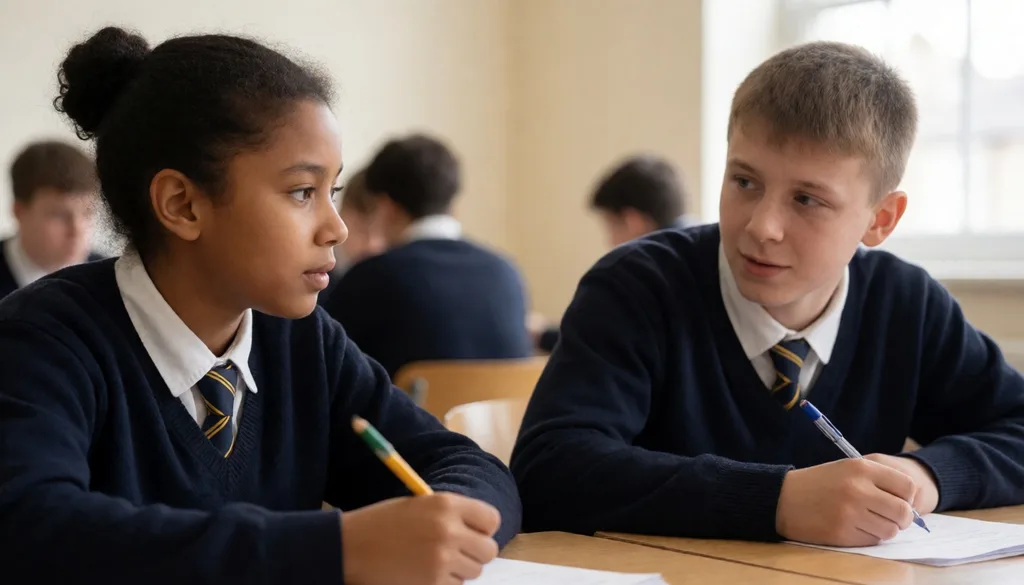
1. It Enables Us To Express Emotions
Individuals frequently convey their emotions through their expressions and behaviors.
A true smile may represent joy. A furrowed brow may signify concentration or concern. A relaxed posture may cause others to feel at ease.
However, one expression does not necessarily reveal exactly what a person feels. Assess the situation and other indicators prior to reaching conclusions.
2. It Reinforces Spoken Messages
Non-verbal cues can enhance comprehension of spoken messages.
For instance, when a teacher states that there are three steps involved in completing a task, raising three fingers reinforces the statement. Additionally, a friendly expression can make instructions seem more approachable.
When both your words and actions convey the same message, your communication is typically easier to follow.
3. It Allows Us To Actively Listen
Listening requires more than simply waiting until it is your turn to speak.
Maintaining eye contact with the speaker, providing occasional nods, and minimizing distractions demonstrates that you are focused. These behaviors may encourage the speaker to elaborate further on their thoughts.
You should also respond verbally as necessary. Although non-verbal cues facilitate active listening, they cannot substitute for clear responses or thoughtful inquiries.
4. It Develops Professional Confidence
Your posture, facial expressions, and voice quality contribute to how you come across during interviews, meetings, and presentations.
Consider two job applicants answering the same interview question. One applicant speaks clearly, sits comfortably, and listens attentively. The other applicant speaks so softly that the interviewer has difficulty hearing and continually looks away from the conversation.
The first applicant may appear more prepared than the second applicant, even though both applicants possess equal knowledge regarding the subject matter.
While good non-verbal communication cannot replace education or experience, it can enable you to present yourself more effectively.
5. It Facilitates Managing Conversations
Individuals utilize non-verbal cues to determine when to begin speaking, demonstrate interest, and recognize when a conversation has concluded.
For example, a slight nod may encourage someone to continue elaborating on a point. A brief pause and a shift in gaze may indicate that the speaker has completed speaking.
These non-verbal cues enable conversations to flow naturally without having to state each transition verbally.
6. It Can Minimize Misunderstandings
At times, words may communicate something different than an individual’s actual behavior.
An individual may say, “Take your time,” while constantly glancing at the clock. The listener may interpret the behavior as impatience.
Recognizing this discrepancy can enable you to inquire for clarification rather than immediately assuming something.
Forms of Non-Verbal Communication
Non-verbal communication includes numerous forms. Below are several forms that are particularly helpful when attempting to improve your everyday communication.
1. Facial Expressions
Facial expressions involve the movement of the eyes, eyebrows, forehead, cheeks, and mouth. They can communicate emotions and reactions.
Examples:
- Smiling when meeting a friend.
- Raising your eyebrows when something surprises you.
- Frowning while attempting to comprehend a complex issue.
- Appearing concerned when someone informs you of unfavorable news.
Real-world Example: During a classroom discussion, a student displays confusion as the instructor explains a new concept. The instructor recognizes the student’s expression and provides additional clarification using a simpler example.
Tips: Maintain natural and appropriate expressions based on the situation. There is no requirement to continually smile. An attentive and relaxed expression is generally sufficient.
2. Gestures
Gestures are movements of the hands, arms, head, or other body parts that convey meaning.
Common gestures include waving, pointing, nodding, shaking your head, and using your hands to illustrate an idea.
Examples:
- Waving your hand to greet a friend.
- Nodding to indicate agreement or understanding.
- Raising your hand to ask a question in class.
- Using your fingers to illustrate the steps in a procedure.
- Giving a thumbs-up to indicate approval in a familiar setting.
Real-world Example: During a presentation, you describe three advantages of time management and count them on your fingers. The audience is able to follow the organization more easily.
Tips: Utilize meaningful gestures that support your message. Excessive hand movements or aggressive pointing at someone can distract the listener or make them uncomfortable.
Keep in mind that gestures can have differing meanings in different cultures. Verify the cultural context prior to assuming that a gesture will be universally understood.

3. Eye Contact
Eye contact involves looking towards another individual’s eyes or face during an interaction. It can demonstrate attention, interest, and engagement.
Examples:
- Looking towards an interviewer while responding to a question.
- Briefly looking at a classmate while listening.
- Looking upward from your notebook when someone addresses you.
- Looking away naturally while contemplating before answering.
Real-world Example: You are explaining a project to your supervisor. At critical moments during your explanation, you look towards your supervisor rather than reading every line from your notes. This makes your explanation feel more direct.
Tips: Utilize comfortable, natural eye contact. Do not stare continuously or force yourself to maintain eye contact if it feels uncomfortable. Cultural expectations, personal preferences, and individual differences all play roles.
4. Posture
Posture refers to how you position your body while sitting, standing, or moving.
Your posture can influence how others perceive your attention, confidence, and willingness to participate.
Examples:
- Sitting upright during an interview.
- Standing comfortably while addressing a group.
- Positioning yourself towards the individual you are listening to.
- Slouching over a desk due to fatigue.
Real-world Example: During a group discussion, a student faces the group and remains attentive while others are speaking. The student’s posture facilitates participation when it is their turn.
Tips: Maintain a relaxed yet reasonably upright posture. Avoid maintaining a rigid posture as excessive stiffness can cause you to appear uncomfortable.
5. Body Movements & Body Language
Body language is a general term for the movements and positions of your body that may convey information.
It includes posture, gestures, facial expressions, movements of the head and shoulders, and repetitive actions.
Examples:
- Leaning slightly forward to listen.
- Repeatedly shifting in your seat because you are anxious.
- Shrugging your shoulders when you do not know an answer.
- Keeping your arms relaxed while speaking.
Real-world Example: A job applicant repeatedly taps their foot while responding to questions. The action may reflect anxiety, restlessness, or merely a habit. The interviewer cannot determine the reason behind the action solely based on the action.
Tips: Be aware of your own habits, especially when speaking publicly. Eliminate movements that distract either yourself or your audience; however, do not assume that every minor movement conveys a specific emotion.
6. Paralanguage or Vocal Cues
Paralanguage refers to the vocal characteristics that accompany spoken words rather than the words themselves. These include tone, pitch, volume, pace, and pauses.
Although you use your voice to speak, these qualities can convey additional information about your attitude and feelings.
Examples:
- Speaking calmly while explaining a problem.
- Increasing your volume slightly to address a large crowd.
- Pausing before introducing an important point.
- Speaking too quickly when nervous.
- Using a warm tone to welcome a guest.
Real-world Example: Compare these two responses:
Response A: “Thank you for helping me.” Spoken in a warm and appreciative tone.
Response B: “Thank you for helping me.” Spoken in a flat or irritated tone.
The words are identical; however, the vocal delivery may alter how the listener interprets the message.
Tips: Practice speaking at a clear and comfortable pace. Record yourself reading a short paragraph and listen for rapid speech, unclear pronunciation, excessive volume, and unnatural pauses.
7. Personal Space & Physical Distance
Proxemics is the study of how people utilize physical space and distance during communication.
The amount of physical space required between individuals varies based on their relationship, location, culture, and situation.
Examples:
- Maintaining a comfortable distance when speaking with a coworker.
- Sitting closer to a family member during a private conversation.
- Providing sufficient space for someone to maneuver comfortably in a crowded hallway.
- Moving back slightly if another individual appears uncomfortable with your proximity.
Real-world Example: During a professional meeting, one coworker stands extremely close to another coworker while explaining a task. The second coworker moves back slightly. Providing additional space can make the interaction more comfortable.
Tips: Be mindful of the setting and the other individual’s comfort level. Do not assume that everyone prefers the same distance.
8. Touch or Haptics
Haptics refers to communication through touch.
Depending on the situation and relationship, touch may express greeting, support, affection, or reassurance.
Examples:
- Shaking hands during a professional introduction when appropriate.
- High-fiving after a team accomplishment.
- Holding a family member’s hand to provide comfort.
- Gently patting someone’s shoulder when it is acceptable and appropriate.
Real-world Example: After successfully presenting, two teammates high-five to celebrate their collective efforts.
Tips: Respect personal boundaries. A handshake, hug, or pat on the shoulder may be appreciated in one situation and unwelcome in another. When uncertain, opt for a greeting that does not necessitate physical contact.
9. Physical Appearance & Personal Presentation
Appearance refers to clothing, grooming, hairstyle, and other visible aspects of personal presentation. These attributes can impact first impressions and demonstrate awareness of a specific setting.
Examples:
- Wearing clean and appropriate attire to a job interview.
- Adhering to a workplace dress code.
- Selecting comfortable and functional attire for a classroom activity.
- Presenting yourself neatly for a formal presentation.
Real-world Example: A candidate arrives for an interview dressed in clean and appropriate clothing and brings organized documentation. Their presentation creates a professional first impression.
Tips: Dress appropriately for the event and environment. You do not need expensive clothing to present yourself well.
10. Silence & Pauses
Silence can convey meaning depending on the situation. A pause may indicate reflection, hesitation, respect, discomfort, or a desire for another individual to speak.
Silence does not always imply agreement or lack of interest.
Examples:
- Pausing before answering a difficult question.
- Remaining silent while a friend describes a personal dilemma.
- Leaving a brief pause after asking an audience a question.
- Waiting briefly instead of interrupting someone.
Real-world Example: During an interview, the interviewer requests that you describe a challenge you have overcome. You pause momentarily to organize your thoughts and then provide a clear response.
Tips: Do not rush to fill every silence. A short, intentional pause can aid in organizing your thoughts and making your response clearer.
11. Usage of Time
Chronemics refers to how time and timing influence communication.
Punctuality, response delays, waiting, and the timing of an interaction can affect how individuals interpret a message. The interpretation depends on the situation and cultural expectations.
Examples:
- Arriving on time for a scheduled interview.
- Allowing someone adequate time to finish speaking.
- Responding within an agreed upon timeframe.
- Avoiding unnecessary interruptions during an important discussion.
Real-world Example: You attend a scheduled online meeting on time and have your documentation prepared. This demonstrates consideration for the meeting’s schedule.
Tips: Respect agreed upon timelines; however, remember that delays can occur for various reasons. Do not automatically interpret a delayed response as disrespectful.
Quick Summary of Non-Verbal Communication Forms
| Form | Example |
|---|---|
| Facial Expressions | Smiling at a friend |
| Gestures | Waving hello |
| Eye Contact | Looking toward a speaker |
| Posture | Sitting attentively |
| Body Movements | Nodding while listening |
| Paralanguage | Speaking in a calm tone |
| Personal Space | Maintaining a comfortable distance |
| Touch | Exchanging an appropriate handshake |
| Appearance | Dressing appropriately for an interview |
| Silence | Pausing to think |
| Usage of Time | Arriving on time for a meeting |
These forms can overlap. For example, nodding is both a gesture and part of body language. The forms listed above serve to assist you in recognizing various signals rather than categorizing each behavior into only one form.
Examples of Non-Verbal Communication in Everyday Life

Understanding definitions is beneficial; however, seeing how non-verbal signals operate in familiar settings makes them easier to recognize.
Example 1: During a Job Interview
Suppose an interviewer asks, “Can you tell me about your strengths?”
A prepared candidate listens without interrupting, sits comfortably, looks toward the interviewer at natural intervals, and speaks at a clear pace.
The candidate utilizes a small hand gesture when describing a specific achievement and pauses briefly before answering follow-up questions.
These behaviors support the spoken answer and assist the interviewer in following the explanation.
Example 2: In a Classroom
A teacher asks, “Does everyone understand the exercise?”
One student nods, while another appears puzzled and continues looking at the example on the board.
The teacher can use these visible responses as indicators. Asking a follow-up question is more reliable than assuming that a nod always indicates complete understanding.
Example 3: While Speaking With a Friend
Your friend says, “I had a really rough day.”
You place your phone aside, turn toward your friend, and listen without interrupting. Your relaxed expression and attentive posture demonstrate that you are available to listen.
You can then ask, “Would you like to discuss what happened?” Your words and behavior work together to convey concern.
Example 4: While Delivering a Presentation
A speaker stands comfortably, looks toward different sections of the audience, and uses hand gestures to explain key points.
The speaker pauses between major ideas rather than rapidly reading from the slides.
This combination of voice, movement, and eye contact can make the presentation easier to follow.
Example 5: In a Workplace Meeting
A colleague explains a new task. You face the speaker, take relevant notes, and nod occasionally when you understand a point.
When something is unclear, you ask a question rather than pretending to understand.
Your non-verbal signals demonstrate attention, while your question verifies that you are following the discussion.
Example 6: During an Online Meeting
Even when communicating via a screen, your facial expressions, posture, and voice remain important.
You can position your camera at a comfortable height, ensure your face is visible when appropriate, mute your microphone when not speaking, and refrain from typing unrelated messages while someone presents.
Remember that camera access, disabilities, internet quality, and personal circumstances affect how people participate online.
Verbal Communication vs Non-Verbal Communication
Verbal communication uses words to convey information. Verbal communication includes spoken communication and written communication. Non-verbal communication conveys additional meaning through behavior, vocal qualities, and other signals that do not depend on the words themselves.
| Basis | Verbal Communication | Non-Verbal Communication |
|---|---|---|
| Primary Method | Words | Facial Expressions, Gestures, Posture, Voice Qualities, and Other Cues |
| Example | Saying “I Agree” | Nodding to Indicate Agreement |
| Primary Purpose | Convey Information, Ideas, and Explanations | Convey or Reinforce Meaning, Emotion, and Reaction |
| Clarity | Can Directly Explain Specific Details | Requires Context and Interpretation |
| Common Setting | Conversations, Emails, Reports, Speeches | Interviews, Meetings, Everyday Interactions |
| Potential Challenge | Unclear Word Choice or Language Barriers | Misinterpreted Signals or Cultural Differences |
Both forms of communication are often used simultaneously. A clear verbal message supported by appropriate non-verbal behavior can make communication easier to understand.
How to Improve Your Non-Verbal Communication Skills
Improving your non-verbal communication skills does not require changing your personality or mimicking someone else’s behavior. Begin by identifying your habits and practicing a few specific skills.
1. Recognize Your Body Language
Be aware of your posture, hand movements, facial expressions, and repetitive habits.
For example, if you frequently look downward while explaining something, practice looking toward your conversation partner at comfortable intervals.
The goal is to become more aware, not to monitor every movement.
2. Practice Comfortable Eye Contact
During a conversation, look toward the other person’s face while they speak and when you respond.
If direct eye contact feels uncomfortable, use natural breaks and other signs of attention such as facing the speaker and responding thoughtfully.
Effective listening does not require constant eye contact.
3. Use Natural Facial Expressions
Allow your expressions to match the situation. A friendly smile can make a greeting feel warmer, while a serious and attentive expression may be more appropriate when someone discusses a problem.
Do not force a smile throughout a conversation.
4. Improve Your Voice Quality
Your pace, volume, tone, and pauses affect how easily people understand you.
Try this short exercise:
- Read a paragraph aloud at a comfortable pace.
- Pause at commas and full stops.
- Emphasize important words naturally.
- Record your voice and listen for unclear pronunciation.
- Repeat the paragraph with improved pacing.
This exercise helps you work on spoken English and vocal delivery at the same time.
5. Listen Without Unnecessary Distractions
Place your phone aside when possible. Face the speaker in a manner that feels comfortable and allow them to complete their point.
Use a nod or a brief verbal response when appropriate. Ask questions if you need clarification.
These small habits can improve everyday conversations.
6. Respect Personal Boundaries
Observe how people react to physical distance and touch. Provide others with room to move and do not assume that everyone welcomes hugs, handshakes, or shoulder pats.
Respectful communication includes acknowledging other people’s comfort levels.
7. Practice in Real-Life Settings
Each day choose one situation in which to practice a specific skill.
For example:
- Day 1: Use a natural greeting and smile.
- Day 2: Practice attentive listening.
- Day 3: Notice your posture during a conversation.
- Day 4: Practice speaking clearly and pausing.
- Day 5: Use purposeful gestures while explaining an idea.
- Day 6: Give a short presentation to a friend.
- Day 7: Reflect on what felt comfortable and what needed practice.
You can repeat the plan each week and gradually work on more challenging situations.
Common Non-Verbal Communication Mistakes to Avoid
1. Assuming That One Gesture Always Has One Meaning
Crossed arms may represent discomfort, cold temperatures, or a comfortable seating position. Do not view one movement as evidence of someone’s feelings.
Better Approach: Consider the setting, the individual’s typical behavior, and other signals. When clarification is necessary, respectfully inquire.
2. Forcing Constant Eye Contact
Staring can make people uncomfortable and some individuals find direct eye contact challenging.
Better Approach: Utilize natural eye contact or other clear signs of attention based on your needs and the situation.
3. Using Too Many Gestures
Repetitively moving your hands, tapping your fingers, or fidgeting may distract listeners.
Better Approach: Choose a few gestures that support your explanation. Relax your hands when you do not need them.
4. Ignoring Your Tone of Voice
A correct answer may sound impatient if delivered in a harsh or dismissive tone.
Better Approach: Speak clearly and consider how your tone relates to your message. If someone misinterprets you, clarify what you intended.
5. Standing Too Close to Others
People have varying expectations regarding personal space.
Better Approach: Provide others with ample space and adjust when appropriate. Acknowledge cultural differences and personal boundaries.
6. Making Assumptions About Other Cultures
A gesture or eye-contact pattern that seems normal to you may have a different meaning elsewhere.
Better Approach: Remain open-minded to differences and inquire politely when you are uncertain.
Practice Exercises to Improve Non-Verbal Communication
Complete these exercises to practice the skills you have learned.
Exercise 1: Identify the Signal
Read each situation and identify the type of non-verbal communication.
- A student waves at a classmate across the classroom.
- A speaker pauses before explaining an important point.
- A candidate sits comfortably during an interview.
- A listener turns toward a person who is speaking.
- A colleague maintains a comfortable distance during a conversation.
Suggested Answers:
- Gesture.
- Silence or Pause, along with Vocal Delivery.
- Posture.
- Body Orientation and Body Language.
- Personal Space or Proxemics.
Exercise 2: Improve the Behavior
Read the situation and consider how the individual could communicate more effectively.
Situation: Rahul is explaining a project to his team. He speaks very quickly, looks only at his notes, and repeatedly taps his pen on the table.
Possible Improvement: Rahul can slow down, look toward his teammates at natural moments, and place his pen aside while he speaks. He can also pause between key points.
These modifications may make the explanation easier to follow without requiring him to change the content of his presentation.
Exercise 3: Practice Listening
Ask a friend to speak for two minutes about a topic they enjoy.
While listening:
- Do not interrupt.
- Place your phone away.
- Face your friend comfortably.
- Use natural expressions and occasional nods.
- Ask one relevant question when they finish.
Following their completion, ask your friend if they felt heard and understood.
Exercise 4: Record a One-Minute Presentation
Select a simple topic such as “My Daily Routine” or “Why Time Management Matters.”
Record yourself speaking for one minute. Review the recording for:
- Posture and Facial Expressions.
- Clarity and Pace of Speech.
- Useful or Distracting Gestures.
- Natural Pauses.
- Overall Comfort While Speaking.
Choose one area to improve in your next recording. Improving one skill at a time makes tracking progress easier.

Frequently Asked Questions About Non-Verbal Communication
1. What is Non-Verbal Communication in Simple Words?
Non-verbal communication means conveying or interpreting messages through signals other than words. Examples include facial expressions, gestures, posture, eye contact, vocal tone, and personal space.
2. What are the Major Types of Non-Verbal Communication?
Major types include facial expressions, gestures, eye contact, posture, body movements, paralanguage, personal space, touch, appearance, silence, and the use of time. Different textbooks may group them differently.
3. What are Five Examples of Non-Verbal Communication?
Five examples are smiling to greet someone, waving to get attention, nodding while listening, sitting attentively during a meeting, and pausing before answering a question.
4. Why is Non-Verbal Communication Important?
It allows individuals to express emotions, support spoken messages, actively listen, manage conversations, and create impressions in social and professional environments.
5. Why is Nonverbal Communication Important?
Nonverbal communication allows us to express our feelings; back up verbal messages; pay attention to what others say; control conversations; and make impressions in both social and work environments.
6. Tone of Voice Is This a Type of Nonverbal Communication?
Yes. Paralanguage refers to tone, pitch, volume, rate (speed), and pauses when we speak. These factors affect how people interpret the message being conveyed.
7. What Are Some Ways Students Can Develop Their Nonverbal Communication Skills?
Students can practice active listening; maintain good eye contact; speak clearly; use appropriate hand movements; relax their body; and give short speeches. To identify areas for improvement, they should review a video of themselves giving a speech or participating in a discussion.
8. Will Nonverbal Communication Differ Among Cultures?
Yes. Hand gestures, eye contact, distance from another person, touching, and whether or not there is expected to be silence will differ based upon culture and situation.
Therefore, it’s best to think about the situation rather than assuming that a particular gesture means exactly the same thing every time.
9. Can Nonverbal Communication Replace Verbal Words?
At times. A wave can act as a hello and a nod can show agreement in a familiar setting.
However, most of the time complicated ideas and major decisions need to be explained through words.
Conclusion
Nonverbal communication affects how we express our feelings; how we receive and process messages from others; and how we interact with others. Facial expressions, hand gestures, body position/posture, eye contact, tone of voice, personal space and many other forms of nonverbal communication are used in communication.
We can develop our nonverbal communication abilities by observing our own behaviors; listening intently; honoring individual space; and practicing nonverbal communication in daily life. Remember that nonverbal cues provide hints, but do not guarantee an explanation of what a person is thinking/feeling.
Today begin with one simple action: Have a conversation with a friend. Put away your cell phone. Listen closely. Notice how your posture, facial expression and tone support this conversation.
For additional information regarding Spoken English, Communication Skills, Confidence Building & Personality Development please visit Fluent Personality.